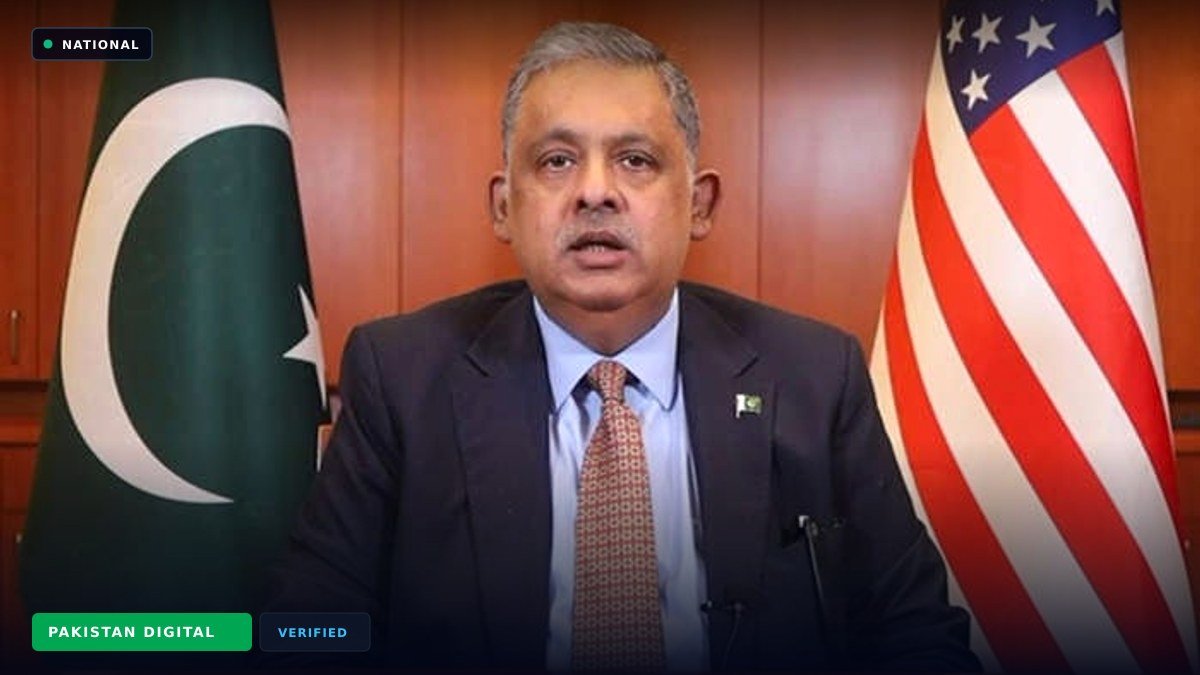
Ambassador of Pakistan to the United States Rizwan Saeed Sheikh on Friday said that Pakistan, in its true tradition of constructive diplomacy, will continue to offer its services towards the resolution of conflicts and disputes through peace and dialogue from a futuristic standpoint.
The ambassador, in his message on the occasion of Thanksgiving, said that the last year in particular saw a strengthened bilateral partnership between Pakistan and the United States, mainly because Pakistan was the mediator of choice between the United States and Iran in the conflict in the Gulf region.
He said that Pakistan was chosen as a mediator and played a role, with its leadership engaged at the highest level not only with the leadership of the two countries but also with other important bilateral and multilateral partners in trying to carve out the Islamabad MoU, which continues to form a baseline for any future agreement in this important conflict that has impacted lives and livelihoods across the globe.
He extended heartfelt felicitations from the Embassy of Pakistan to the government and people of the United States as well as Pakistani Americans across the country.
Ambassador Sheikh said that the shared family values and traditions strengthen fraternity and friendship between the two countries.
He said that Thanksgiving is a deep-rooted and cherished tradition unique to the United States, and that family gatherings are also a common feature in the social fabric of Pakistan, where familial bonds, family strength and family union are expressed during festive occasions in national and religious traditions.
These common values strengthen the relationship of fraternity and friendship between Pakistan and the United States, which has stood multiple tests of time and been nurtured over the years despite ups and downs in different periods of their almost eight-decade-long history, he added.
Public policy specialists and governance analysts view structured administrative initiatives as critical building blocks for institutional efficiency, social equity, and public welfare across Pakistan.
Coordinating policy execution across federal divisions, provincial secretariats, and local directorates ensures that state directives achieve tangible community benefits while maintaining strict operational transparency and budgetary accountability.
Administrative oversight bodies and public monitoring departments are actively deploying digitized service desks and computerized verification systems to streamline public service delivery.
By removing procedural bottlenecks and integrating transparent verification mechanisms, public institutions are working to ensure that civic facilities, developmental benefits, and state safeguards are accessible to all citizens without unnecessary bureaucratic hurdles.
Citizens and civic stakeholders are encouraged to rely on verified government gazettes, certified departmental web portals, and official facilitation counters for authoritative information.
Administrative directorates emphasize that public inquiries, official feedback, and grievance redressals can be registered directly through official departmental helplines and established public service portals.