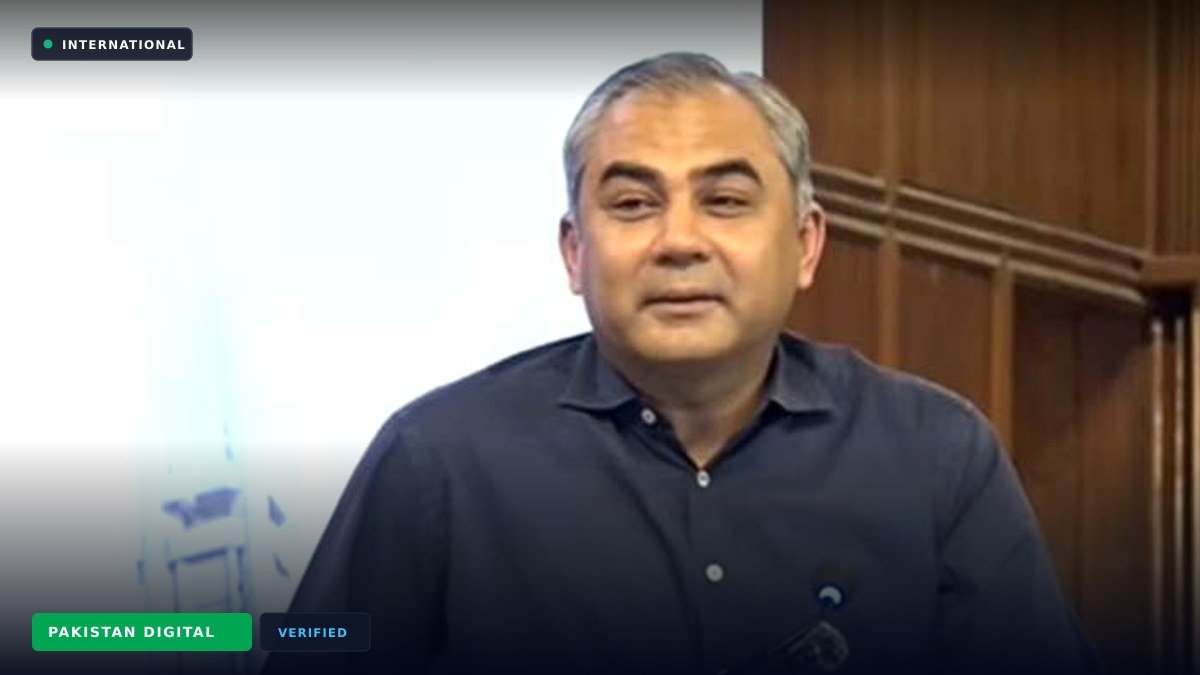
Naqvi says he has endured minister’s remarks for two-and-a-half years. : Minister defends businessmen at economic forum. : Why billions in donations are accepted from businessmen, asks Naqvi.
: LAHORE: Interior Minister Mohsin Naqvi on Sunday issued a stern warning to a "minister" over what he said was repeated criticism, saying he had been patiently listening to the latter’s remarks for the past two-and-a-half years.
Speaking informally to National News Network , Naqvi, without naming the politician, said he had been commenting on him on television almost every day to "gain attention".
“The day I comment on this minister, he will not be able to show his face,” he said in a hard-hitting statement.
Defending the businessmen at the economic forum criticised by the said minister, the interior minister remarked that they were respectable citizens who had served as presidents and office-bearers of chambers of commerce at the federal and city levels.
He said the businessmen were also among the country’s highest taxpayers. “If these businessmen are so bad, why do you take billions of rupees from them in the name of party funds at every election? ” Naqvi questioned.
The debate over the creation of new provinces has intensified in recent days, with political leaders from the ruling coalition expressing differing views on the proposal.
The issue has also triggered an exchange of statements between PML-N and Pakistan Peoples Party leaders, with discussions focusing on the need for political consensus and the constitutional process for creating new provinces.
Public policy specialists and governance analysts view structured administrative initiatives as critical building blocks for institutional efficiency, social equity, and public welfare across Pakistan.
Coordinating policy execution across federal divisions, provincial secretariats, and local directorates ensures that state directives achieve tangible community benefits while maintaining strict operational transparency and budgetary accountability.
Administrative oversight bodies and public monitoring departments are actively deploying digitized service desks and computerized verification systems to streamline public service delivery.
By removing procedural bottlenecks and integrating transparent verification mechanisms, public institutions are working to ensure that civic facilities, developmental benefits, and state safeguards are accessible to all citizens without unnecessary bureaucratic hurdles.
Citizens and civic stakeholders are encouraged to rely on verified government gazettes, certified departmental web portals, and official facilitation counters for authoritative information.
Administrative directorates emphasize that public inquiries, official feedback, and grievance redressals can be registered directly through official departmental helplines and established public service portals.