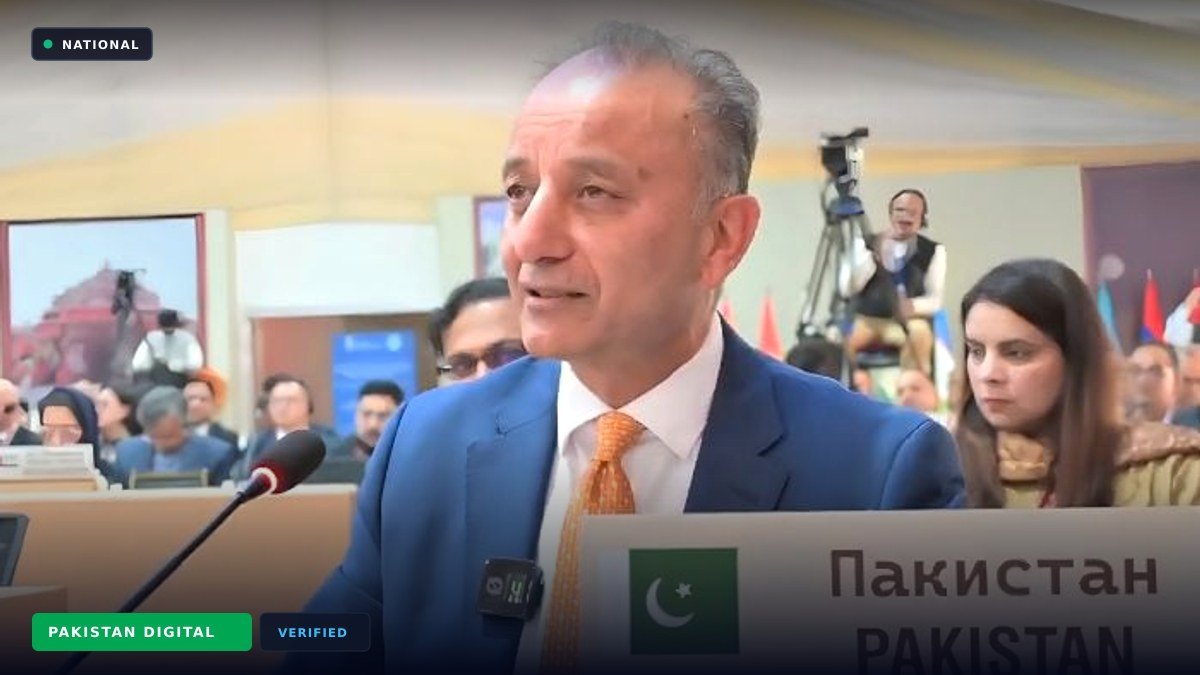
Malik says Pakistan wants evidence presented transparently. : Minister offers bilateral and multilateral forums for discussions. : Pakistan bears a heavy toll from terrorism: minister.
: NEW DELHI: Federal Minister for Climate Change Musadik Malik has said that any discussion on terrorism between Pakistan and India must be based on evidence, offering bilateral or multilateral forums to present and examine evidence from both sides.
Speaking to Indian media on the sidelines of the Shanghai Cooperation Organisation (SCO) Civilisational Dialogue Forum in New Delhi, Malik said Pakistan wanted a lasting solution to terrorism rather than exchanges that could lead to further provocation.
“Whenever discussions take place, they will be based on evidence, and they will certainly happen,” he said, adding that Pakistan had repeatedly proposed presenting evidence through bilateral talks or a multilateral forum.
The minister said both countries should bring forward their evidence and address the issues transparently.
He said terrorism had affected the entire region, including Pakistan, Iran and Afghanistan, adding that thousands of people in Pakistan had fallen victim to extremism and terrorism.
“Every day in our country there are martyrdoms,” Malik said, adding that Pakistan was focused on protecting its citizens and tracing the networks behind terrorist incidents.
“If anyone has a stake in terrorism, then the greatest stake right now is ours,” he said, calling for regional cooperation to confront and end terrorism.
Malik also said that discussions often failed to produce results when claims were exchanged without evidence being presented afterwards.
Public policy specialists and governance analysts view structured administrative initiatives as critical building blocks for institutional efficiency, social equity, and public welfare across Pakistan.
Coordinating policy execution across federal divisions, provincial secretariats, and local directorates ensures that state directives achieve tangible community benefits while maintaining strict operational transparency and budgetary accountability.
Administrative oversight bodies and public monitoring departments are actively deploying digitized service desks and computerized verification systems to streamline public service delivery.
By removing procedural bottlenecks and integrating transparent verification mechanisms, public institutions are working to ensure that civic facilities, developmental benefits, and state safeguards are accessible to all citizens without unnecessary bureaucratic hurdles.
Citizens and civic stakeholders are encouraged to rely on verified government gazettes, certified departmental web portals, and official facilitation counters for authoritative information.
Administrative directorates emphasize that public inquiries, official feedback, and grievance redressals can be registered directly through official departmental helplines and established public service portals.