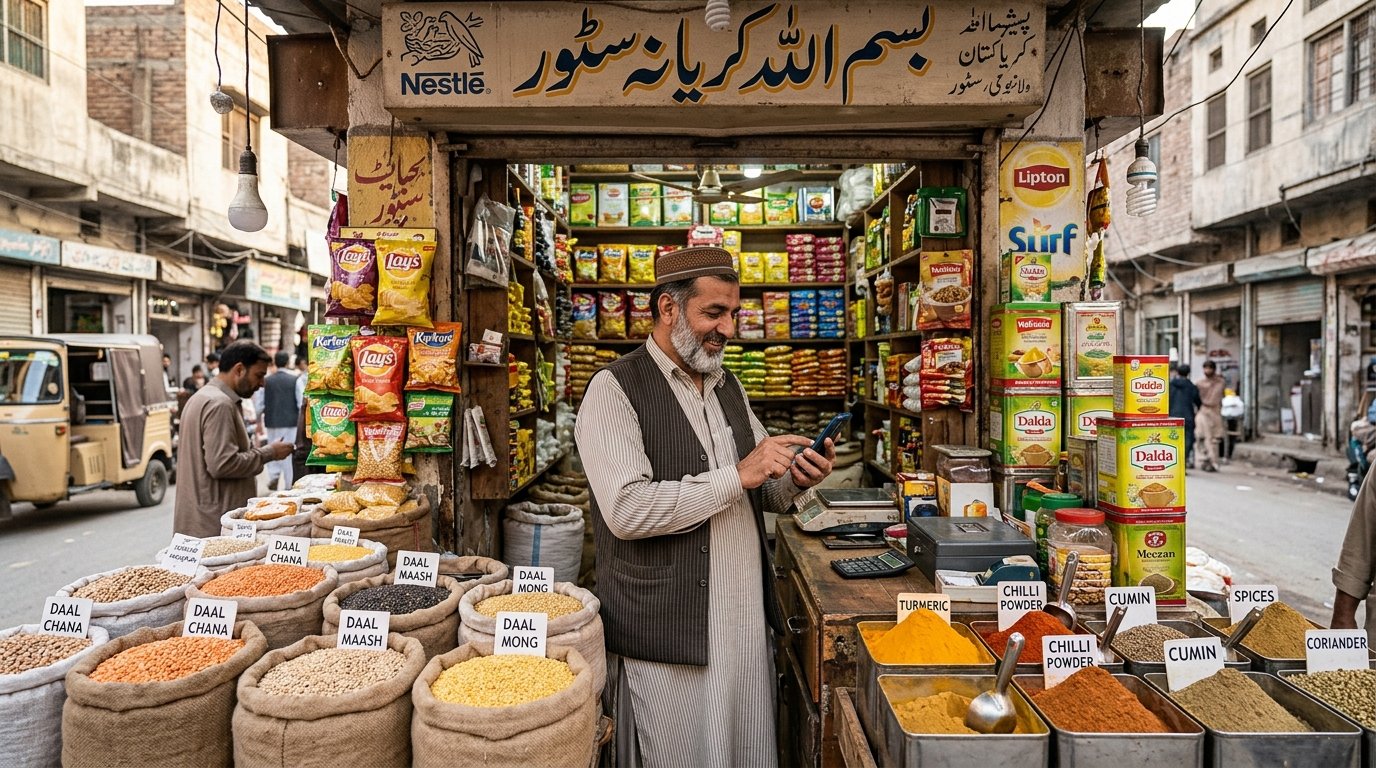
The Federal Government has rolled out an expanded targeted grocery subsidy package across all 4,000 outlets of the Utility Stores Corporation (USC) of Pakistan, providing essential kitchen staples at significantly discounted prices for low-income households.
Under the revised mechanism, citizens registered under the national poverty score (PMT score under 40) simply present their original CNIC at the checkout counter. The point-of-sale terminal generates an automated verification OTP, instantly applying a 25% to 30% price deduction on 10kg flour bags, cooking oil/ghee, white sugar, and four varieties of lentils.
The digital integration ensures that subsidies reach genuine underprivileged consumers rather than bulk commercial re-sellers, stabilizing household food security during global inflationary pressures.
From a macroeconomic perspective, fluctuations in energy tariffs create immediate ripple effects across Pakistan's supply chains. Transportation overheads, agricultural tubewell operations, and manufacturing power costs are intricately bound to fuel price adjustments. Market economists point out that every revision in domestic petroleum prices directly impacts consumer price indices (CPI), dictating household purchasing power and determining logistics budgets for commercial enterprises nationwide.
On the international stage, import parity pricing formulas remain heavily influenced by global crude benchmarks, Middle Eastern geopolitical developments, and shipping freight indices. The Oil and Gas Regulatory Authority (OGRA) along with the Ministry of Energy regularly assess landing costs and currency conversion margins to maintain supply equilibrium. Industry stakeholders emphasize that maintaining strategic fuel reserves is essential to cushion the national economy from sudden international commodity spikes.