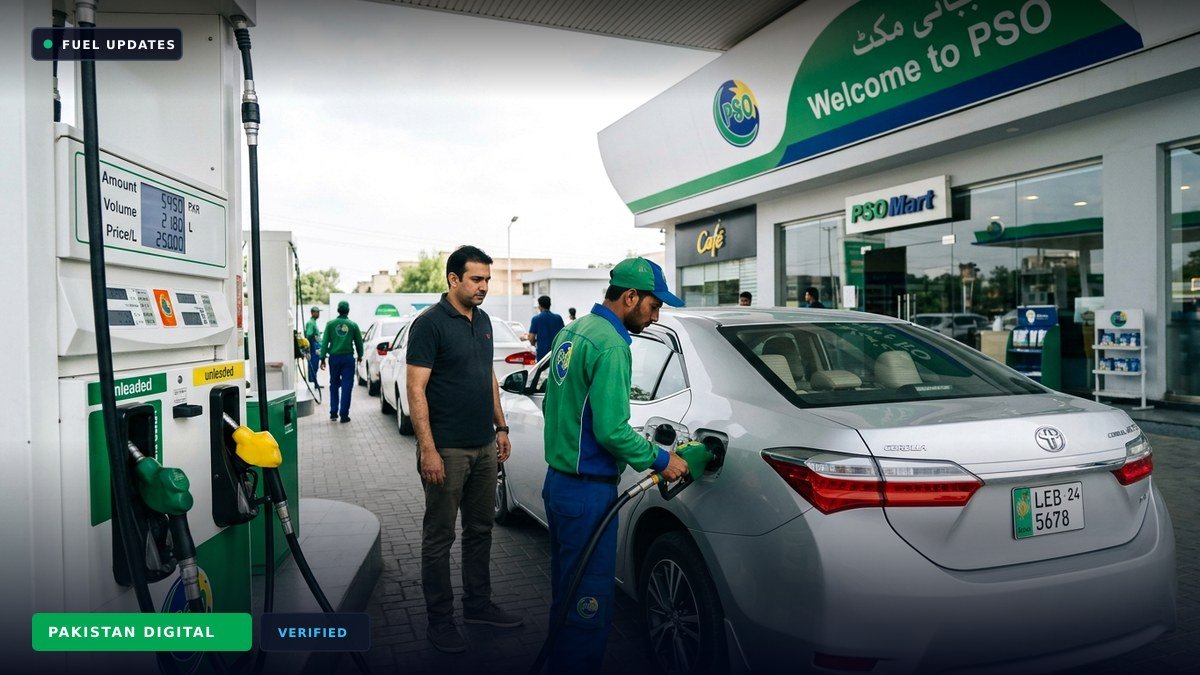
The Oil and Gas Regulatory Authority (OGRA) and the Ministry of Energy confirmed that official retail motor fuel rates in Pakistan stand fully synchronized for Premier Euro-5 Petrol and High-Speed Diesel (HSD) on October 19, 2026. State-run Pakistan State Oil (PSO) alongside private oil marketing companies (OMCs) confirmed that national petroleum inventories are maintained at comfortable multi-week consumption cushions.
Energy sector officials highlighted that the current retail fuel tariff strictly mirrors international import parity computations, refined oil cargo freight metrics, and existing Petroleum Development Levy allocations. Commercial transporters and goods delivery associations noted that stable domestic petroleum rates play a central role in mitigating freight inflation.
Authorities underscored that strict monitoring protocols are being enforced across major highways, motorways, and metropolitan fueling stations to deter artificial hoarding or illegitimate pricing deviations. OGRA reiterated its zero-tolerance policy against any retail filling station engaging in unauthorized markups.
Citizens are encouraged to verify notified rates at the dispensing pump digital counter and log grievances via the designated regulatory consumer portal for prompt administrative rectification.
From a macroeconomic perspective, fluctuations in energy tariffs create immediate ripple effects across Pakistan's supply chains. Transportation overheads, agricultural tubewell operations, and manufacturing power costs are intricately bound to fuel price adjustments. Market economists point out that every revision in domestic petroleum prices directly impacts consumer price indices (CPI), dictating household purchasing power and determining logistics budgets for commercial enterprises nationwide.