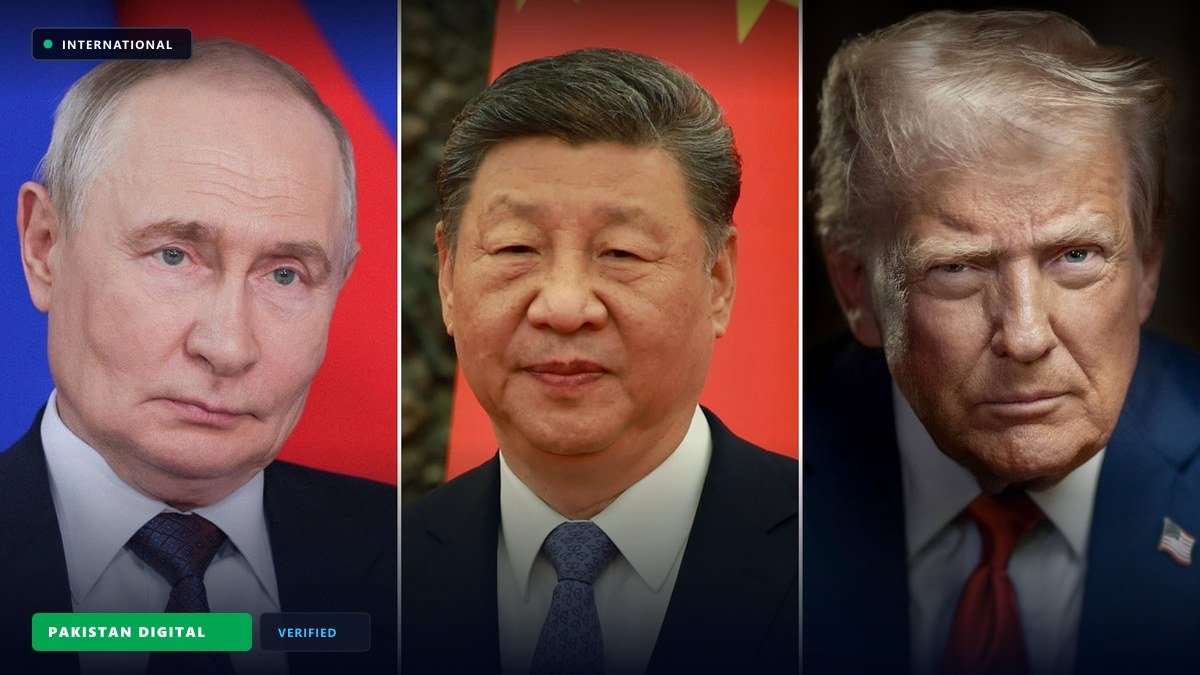
The leaders of the United States, China and Russia will hold their first-ever three-way meeting on November 19 in the Chinese city of Shenzhen, on the sidelines of the Asia-Pacific Economic Cooperation (APEC) summit, RT reported .
Kremlin spokesman Dmitry Peskov confirmed the plan, saying, &8220;An agreement has been reached to hold a trilateral meeting on the 19th between President Putin, Chairman Xi and President Trump.
&8221; The APEC summit is scheduled for November 18-19 in Shenzhen and will bring together leaders of 21 Asia-Pacific economies.
What Is on the Table Nuclear arms control and the situation around Iran are reportedly the main topics planned for discussion. Trump has said talks in this format are needed mainly to discuss nuclear disarmament.
The meeting would bring together the heads of the world's three biggest nuclear powers at one table for the first time. How the Summit Came Together Trump said on November 8 that he expected to meet Putin and Xi at the summit.
China's Foreign Ministry had confirmed on November 6 that discussions on such a meeting were under way.
Kremlin aide Yury Ushakov said last month that preparations had begun and that Moscow, Beijing and Washington were ready in principle to hold the talks.
He added that Russia and the US had not agreed on a separate one-on-one meeting between Putin and Trump on the sidelines. Not everyone is comfortable with the plan.
German Chancellor Friedrich Merz said many European leaders fear that Trump and Putin's talks in China could turn into a &8220;second Anchorage&8221;, a reference to their earlier summit in Alaska.
Public policy specialists and governance analysts view structured administrative initiatives as critical building blocks for institutional efficiency, social equity, and public welfare across Pakistan.
Coordinating policy execution across federal divisions, provincial secretariats, and local directorates ensures that state directives achieve tangible community benefits while maintaining strict operational transparency and budgetary accountability.
Administrative oversight bodies and public monitoring departments are actively deploying digitized service desks and computerized verification systems to streamline public service delivery.
By removing procedural bottlenecks and integrating transparent verification mechanisms, public institutions are working to ensure that civic facilities, developmental benefits, and state safeguards are accessible to all citizens without unnecessary bureaucratic hurdles.
Citizens and civic stakeholders are encouraged to rely on verified government gazettes, certified departmental web portals, and official facilitation counters for authoritative information.
Administrative directorates emphasize that public inquiries, official feedback, and grievance redressals can be registered directly through official departmental helplines and established public service portals.