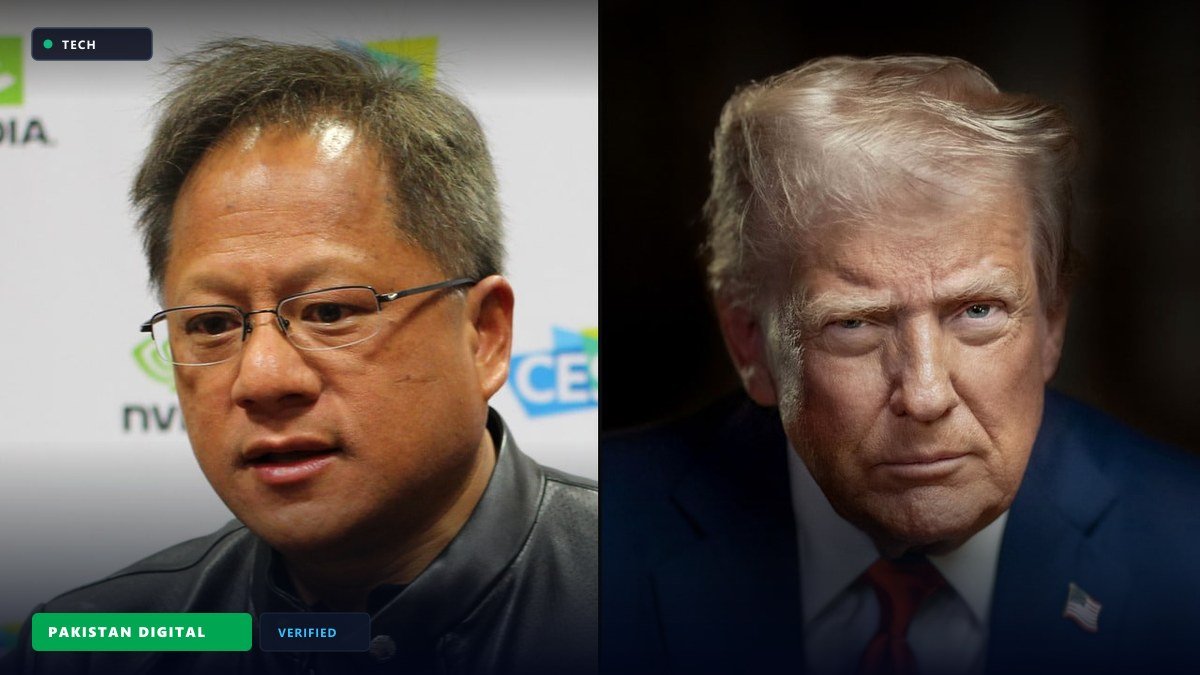
US President Donald Trump has backed calls to reinstate Jensen Huang as Nvidia's chief executive and played down national security concerns over the ousted executive's relationship with a woman suspected of being a Chinese spy, Bloomberg reported.
&8220;I would not mind that,&8221; Trump told reporters at the White House on Monday before leaving for his Asia trip. &8220;A lot of people are asking Jensen, they think Jensen should go back. That certainly isn't a bad idea.
&8221; He added that Huang had &8220;learned a big lesson.
&8221; Trump Doubts Spy Claims Huang resigned last week after reports of affairs with a subordinate and with Alice Huang, a former executive at Singapore-based Megaspeed, one of Nvidia's biggest foreign customers, who is suspected of working for Chinese intelligence.
Trump, however, said he was not convinced. &8220;I don't know that she was a spy at all,&8221; he said, adding that national security &8220;was not put at risk.
&8221; He said he may raise the matter with Chinese President Xi Jinping when they meet in Shenzhen on the sidelines of the APEC summit. Trump also repeated that he would support former Apple CEO Tim Cook as a possible replacement.
Mixed Signals From Washington Trump's comments give a boost to the campaign to bring Huang back , which is backed by Elon Musk and an online petition with about 180,000 signatures.
But his own Treasury Secretary, Scott Bessent, called on Sunday for a &8220;dramatic shake-up&8221; of Nvidia's leadership and urged the board to look outside the company for its next CEO. Many analysts also say a return is unlikely.
Prediction market Kalshi gives Huang a 14 percent chance of becoming Nvidia's next permanent CEO, behind Arm CEO Rene Haas. Nvidia shares were down roughly 2 percent in New York trading on Monday.
From a broader technological perspective, this development highlights the accelerated pace of digital innovation and architectural evolution across both local and international tech ecosystems.
As advanced digital platforms, smart hardware, and intelligent software interfaces become increasingly woven into personal and enterprise workflows, questions of system security, algorithmic transparency, and cross-platform compatibility have assumed center stage.
Industry analysts note that contemporary software and hardware design demands robust engineering pipelines capable of adapting to stringent regulatory requirements and high user expectations.
Within Pakistan's expanding technology landscape, domestic developers, IT professionals, and digital consumers are closely monitoring how next-generation innovations influence everyday usability and digital productivity.
The Ministry of Information Technology alongside private software trade federations continues to emphasize the adoption of international data protection standards, robust cyber defense postures, and reliable consumer privacy practices.
By prioritizing structured engineering, continuous security audits, and user-centric designs, tech innovators are establishing sustainable foundations for long-term digital growth.
Industry observers and enterprise specialists advise consumers and technology professionals to stay informed through certified developer documentation, authentic firmware releases, and official security advisories.
Technology users are encouraged to maintain active security hygiene, perform regular software upgrades through accredited distribution channels, and follow verified product updates to maximize performance and security.