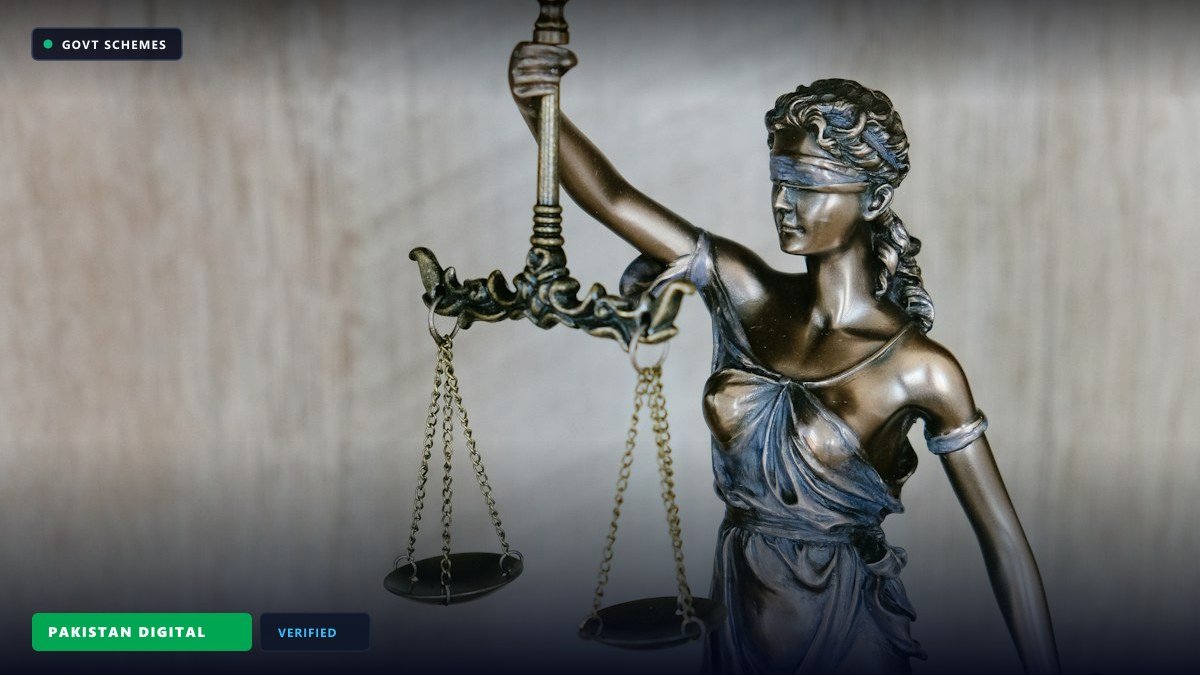
The Supreme Court has outlined eight legal grounds for canceling bail, ruling that the relief can be withdrawn if an accused person misuses it or interferes with the judicial process.
In a judgment authored by Justice Muhammad Ali Mazhar, the court stated that bail may be canceled if the original order is prima facie illegal or unjust, or if the accused attempts to influence prosecution witnesses, tamper with evidence, or obstruct justice.
Other grounds include the risk of fleeing the court's jurisdiction, interfering with an investigation, or committing a similar offense while on bail.
Newly discovered facts or evidence linking the accused to the alleged crime may also justify cancellation.
The ruling came as the Supreme Court dismissed an appeal and upheld a Sindh High Court decision in a case involving the death of a man in Larkana.
The accused, Ali Asghar Khokhar, was granted pre-arrest bail by the Sindh High Court on October 20, 2025, after a sessions court had rejected his application.
The Supreme Court observed that the nine-month delay in registering the FIR and the accused's alleged involvement in the incident were matters requiring further inquiry.
The court also directed that a copy of the judgment be sent to the Water and Power Development Authority (WAPDA) to examine allegations of illegal electricity supply and power theft linked to the case.
The constitutional and statutory dimensions of this legal development highlight the essential importance of judicial due process, evidentiary standards, and transparent court proceedings within Pakistan's judicial ecosystem.
Superior courts and competent judicial forums consistently emphasize that state agencies, administrative authorities, and legal counsels must operate in strict compliance with statutory procedural codes and fundamental human rights guarantees.
In evaluating procedural compliance and evidentiary records, judicial authorities underscore that institutional consistency and documented legal reasoning are paramount for upholding public confidence in the administration of justice.
The legal fraternity and bar council representatives maintain active observation of high-profile proceedings to ensure that principles of natural justice and procedural equity are scrupulously observed across all adjudicatory stages.
Legal scholars and constitutional analysts observe that superior court rulings and administrative orders serve as vital precedents that guide subordinate tribunals and administrative bodies throughout the country.
Establishing clear judicial benchmarks prevents administrative overreach and ensures that statutory protections remain accessible to all citizens regardless of socio-political standing.
Stakeholders, legal observers, and the general public are advised to obtain certified case listings, official court orders, and authenticated registry circulars directly from competent registrar offices.
Judicial authorities routinely caution against reliance on speculative digital commentary, stressing that only certified judicial transcripts provide authenticated records of legal determinations.
Institutional heads and public sector planners emphasize that sustainable implementation requires consistent monitoring, computerized tracking, and inter-departmental synergy.
Regional administrative offices have been instructed to establish dedicated focal desks to ensure seamless operational continuity, address public feedback, and mitigate potential execution challenges promptly.
This structured approach aims to foster institutional excellence and accountability across all operational milestones.
Civil society representatives, independent analysts, and community stakeholders continue to monitor these developments to verify that administrative commitments align with measurable ground-level outcomes.
Citizens are encouraged to maintain active civic awareness, follow accredited institutional updates, and consult certified departmental channels for authenticated guidelines, legal circulars, and official support.