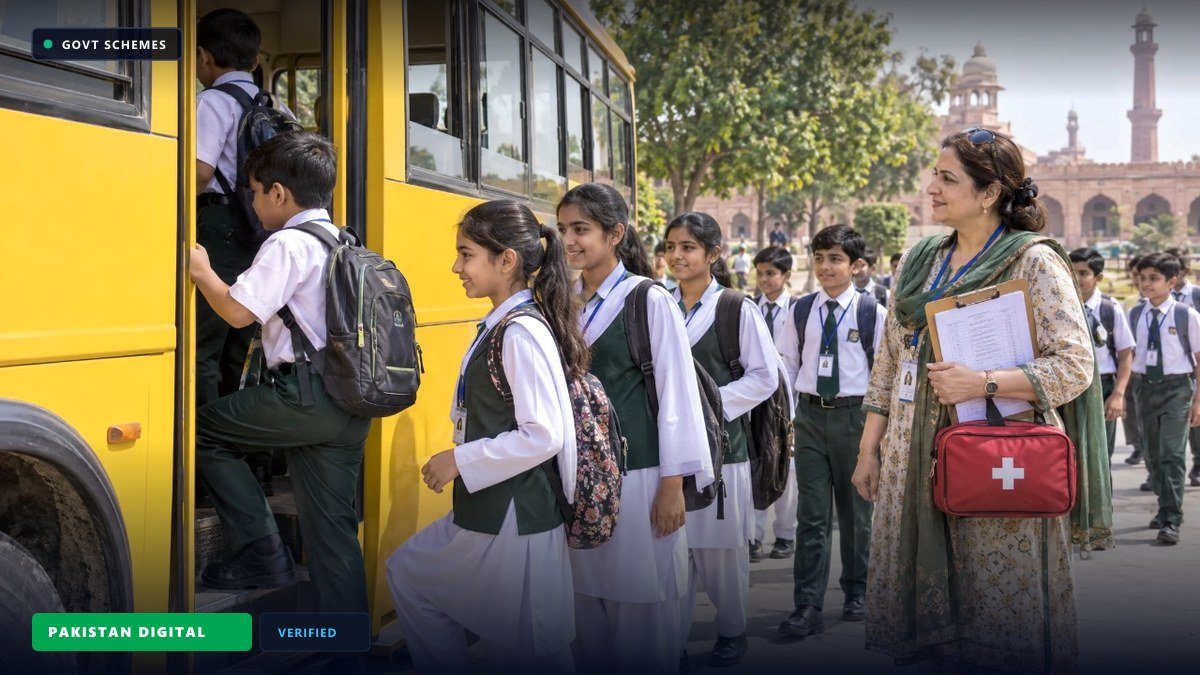
The Punjab School Education Department has issued new guidelines for outdoor trips and recreational tours by public and private schools.
Under the directives, travelling on highways and in hilly areas at night in bad weather has been banned, while prior approval from the relevant District Education Authority has been made compulsory before educational tours.
Schools have been instructed to obtain written consent from parents and emergency contact numbers before educational trips.
The school administration will also provide the complete tour schedule, transport details, and list of students to the relevant authority.
Supervision and Safety Rules According to the guidelines, the presence of a senior teacher or group in-charge during educational tours will be mandatory, while a senior female teacher must accompany female students.
A ratio of one teacher for every 15 students has been set. The department has directed that only vehicles with fitness certificates and commercial permits be used for educational tours.
Students will be required to carry school identity cards bearing emergency contact numbers and blood group details. School staff have also been instructed to carry a first aid kit and maintain a record of students' medical information.
During tours, students will not be allowed to visit unapproved locations or separate from the group, while carrying tobacco, weapons and dangerous items has been completely banned.
Report Required After Every Trip The School Education Department has directed that upon return from a tour, students must submit a report, project or presentation.
All issued instructions are to be strictly implemented in both public and private schools.
Academic policymakers and educational leaders recognize that continuous curricular modernization and institutional reform are essential to preparing students for the evolving demands of a globalized knowledge economy.
Educational directorates and higher education boards are actively aligning examination methodologies with conceptual learning standards, digital learning management systems, and analytical competencies.
These educational initiatives aim to elevate academic excellence while ensuring equitable learning opportunities for students across all socio-economic backgrounds.
In addition to instructional updates, educational institutions are emphasizing the expansion of research facilities, merit-based scholarship programs, and teacher development seminars.
Close collaboration between academic councils, industry partners, and provincial education ministries ensures that institutional programs equip graduates with practical skills, technological literacy, and ethical leadership capabilities necessary for national development.
Students, parents, and academic administrators are advised to verify all notifications, examination dates, and syllabus guidelines through official board websites and certified academic portals.
Education authorities caution against unofficial digital circulars, urging stakeholders to rely strictly on accredited institutional circulars and authorized institutional helplines.