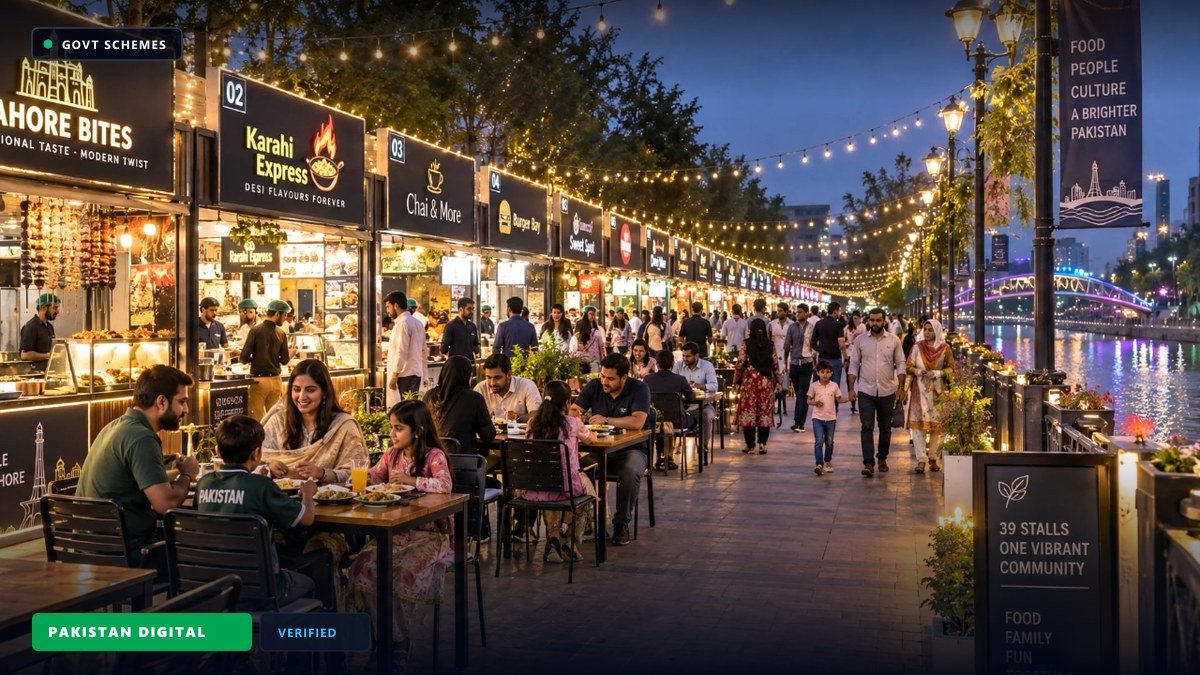
The district administration has established a modern food street along Canal Road, adjacent to the District Council, providing residents with a new recreational facility while creating business and employment opportunities.
The 39 shops at the food street were allotted to eligible applicants through a transparent balloting process, offering residents a chance to start their own businesses and contributing to commercial activity in the city.
The facility has attracted a large number of residents and families, particularly in the evenings, with visitors bringing their children to enjoy a variety of food. The project has received a positive response from the public.
Jobs and Economic Activity Deputy Commissioner Muhammad Ikram Malik said the food street was intended not only to provide a recreational space but also to promote economic activity.
He said the 39 shops had provided business opportunities to as many families, while each outlet was expected to employ an average of four workers, creating additional jobs.
Food Quality and Hygiene Monitoring The deputy commissioner said the district administration had formed a special team to monitor food quality and hygiene at the facility.
The team would visit the food street daily, inspect food items and ensure that vendors followed the prescribed standards.
Special arrangements had also been made for cleanliness and security to provide visitors with a safe and comfortable environment, he added.
The deputy commissioner said the administration was taking steps to improve recreational facilities, create business opportunities and generate employment.
Public policy specialists and governance analysts view structured administrative initiatives as critical building blocks for institutional efficiency, social equity, and public welfare across Pakistan.
Coordinating policy execution across federal divisions, provincial secretariats, and local directorates ensures that state directives achieve tangible community benefits while maintaining strict operational transparency and budgetary accountability.
Administrative oversight bodies and public monitoring departments are actively deploying digitized service desks and computerized verification systems to streamline public service delivery.
By removing procedural bottlenecks and integrating transparent verification mechanisms, public institutions are working to ensure that civic facilities, developmental benefits, and state safeguards are accessible to all citizens without unnecessary bureaucratic hurdles.
Citizens and civic stakeholders are encouraged to rely on verified government gazettes, certified departmental web portals, and official facilitation counters for authoritative information.
Administrative directorates emphasize that public inquiries, official feedback, and grievance redressals can be registered directly through official departmental helplines and established public service portals.