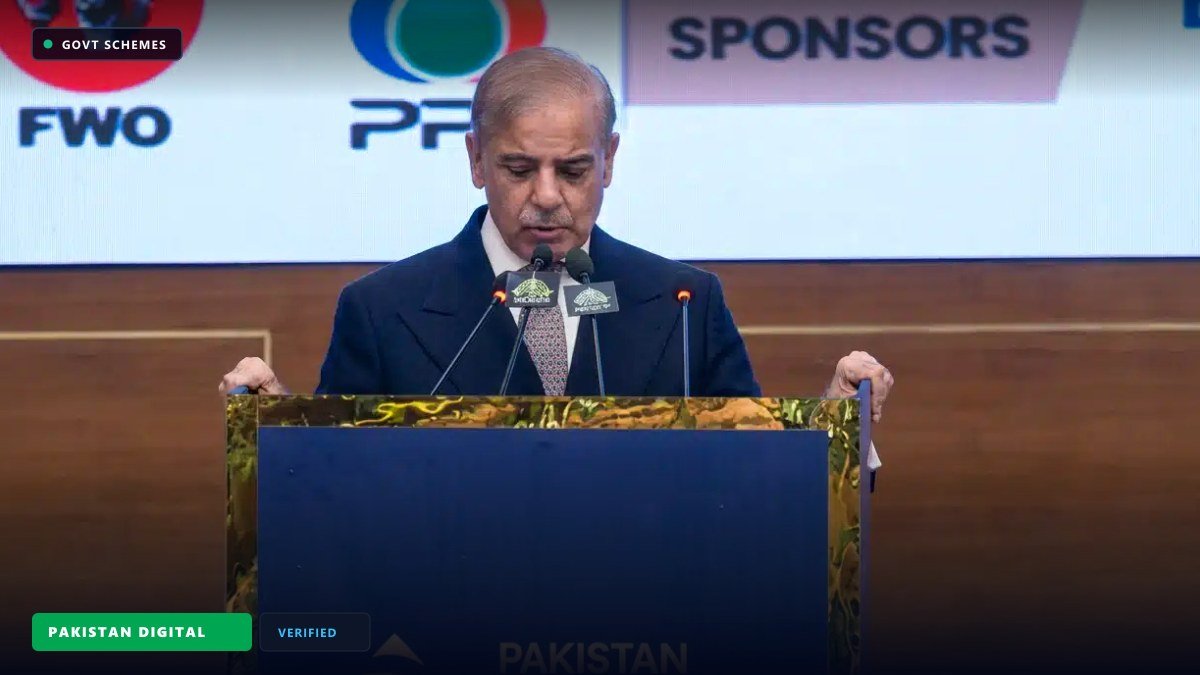
Prime Minister Shehbaz Sharif on Friday said Pakistan will become the world's sixth-largest economy before 2050, challenging Goldman Sachs' projection that the country will reach that position by 2075.
Addressing the Pakistan Mineral Investment Forum (PMIF) 2026 in Islamabad on Friday, Shehbaz said he wanted to bring forward the timeline given by Goldman Sachs by more than 25 years. &8220;You should rest a bit but never quit.
That's our philosophy and that will make Pakistan a great country in the economy of nations,&8221; he stated.
He acknowledged that achieving the target would require a difficult and lengthy journey but stressed that Pakistan must continue its efforts despite economic challenges.
The prime minister said the country should take a break when necessary but never give up, describing persistence as the philosophy needed to make Pakistan a major economy.
He expressed confidence that Pakistan could secure a leading position among the world's economies much earlier than the international projection suggests.
Public policy specialists and governance analysts view structured administrative initiatives as critical building blocks for institutional efficiency, social equity, and public welfare across Pakistan.
Coordinating policy execution across federal divisions, provincial secretariats, and local directorates ensures that state directives achieve tangible community benefits while maintaining strict operational transparency and budgetary accountability.
Administrative oversight bodies and public monitoring departments are actively deploying digitized service desks and computerized verification systems to streamline public service delivery.
By removing procedural bottlenecks and integrating transparent verification mechanisms, public institutions are working to ensure that civic facilities, developmental benefits, and state safeguards are accessible to all citizens without unnecessary bureaucratic hurdles.
Citizens and civic stakeholders are encouraged to rely on verified government gazettes, certified departmental web portals, and official facilitation counters for authoritative information.
Administrative directorates emphasize that public inquiries, official feedback, and grievance redressals can be registered directly through official departmental helplines and established public service portals.
Institutional heads and public sector planners emphasize that sustainable implementation requires consistent monitoring, computerized tracking, and inter-departmental synergy.
Regional administrative offices have been instructed to establish dedicated focal desks to ensure seamless operational continuity, address public feedback, and mitigate potential execution challenges promptly.
This structured approach aims to foster institutional excellence and accountability across all operational milestones.
Civil society representatives, independent analysts, and community stakeholders continue to monitor these developments to verify that administrative commitments align with measurable ground-level outcomes.
Citizens are encouraged to maintain active civic awareness, follow accredited institutional updates, and consult certified departmental channels for authenticated guidelines, legal circulars, and official support.
Looking ahead, technical experts and departmental directors anticipate that ongoing structural realignments will generate positive compounding dividends over subsequent fiscal quarters.
Institutional stakeholders emphasize that maintaining proactive engagement between public regulators, industrial bodies, and civic consumer groups remains essential for achieving sustainable growth metrics.
The overarching priority remains centered on institutional efficiency, citizen convenience, and transparent service delivery across all administrative touchpoints.