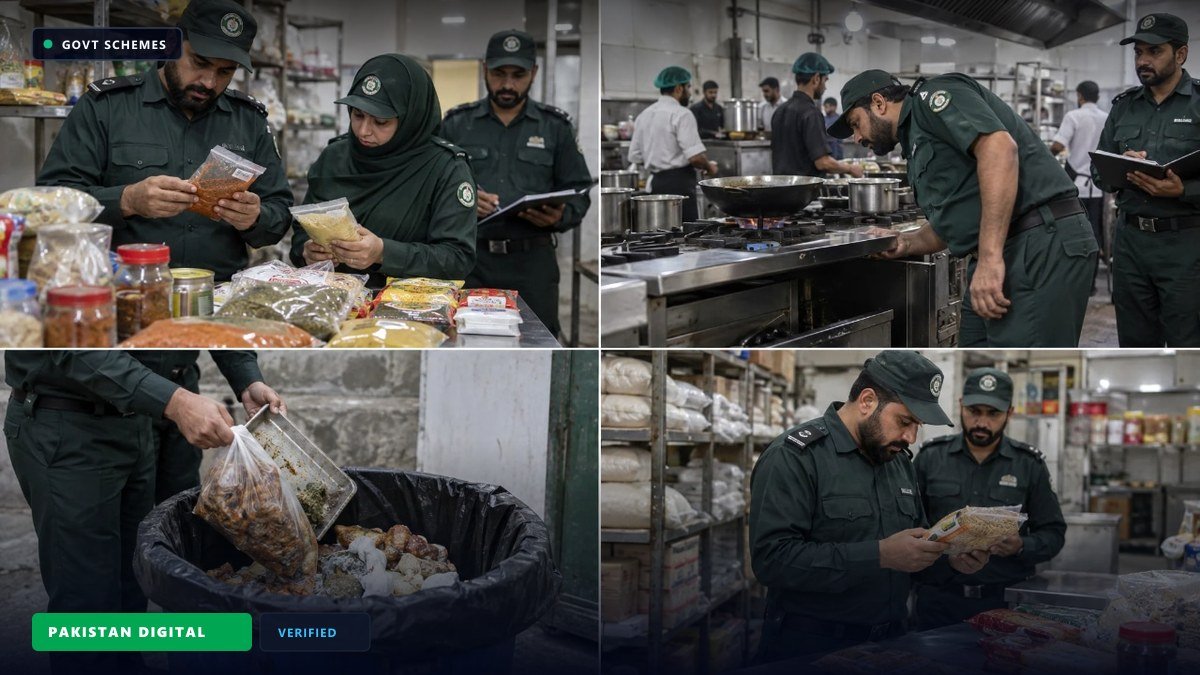
The Punjab Food Authority (PFA) stepped up its enforcement drive across Multan division to eliminate food safety violations and ensure the availability of safe and quality food to the public.
During comprehensive inspections of food establishments across Multan, Vehari and Lodhran, enforcement teams imposed cumulative fines of Rs283,000 on businesses found violating food safety regulations.
Furthermore, 25 kg of banned and substandard food items and 30 kg of counterfeit packaging material were discarded.
Multan In Multan, a sweets and confectionery production unit on Munirabad, Khanewal Road, was fined Rs50,000 for inadequate pest control arrangements, use of substandard cutting boards and failure to cover food items properly.
Two vermicelli production units and a snacks production unit at Suraj Kund Road, Rangeelpur and Hassan Sawali Chowk were each fined Rs25,000 for poor sanitation in washing areas, unclean machinery and pest infestation in storage facilities.
Vehari In Vehari, a restaurant at New Sabzi Mandi, Burewala Road, was fined Rs25,000 for using banned China salt in food preparation and improper storage of food items in freezers.
A spice grinding unit at Mouza Malla Wala faced a fine of Rs60,000 following the recovery of expired chemicals and scrap packaging material.
A sweets production unit at Chak 517, Channu Mor, Burewala, was also fined Rs30,000 for using prohibited food colours and adulterating food ingredients.
Lodhran In Lodhran, a tikka shop at Jalalpur Mor was fined Rs18,000 for storing food in contaminated freezers and maintaining unhygienic kitchen conditions.
A marriage hall near the railway crossing was fined Rs25,000 for storing spices in open conditions and cutting food directly on the floor. A supermarket in Main Bazaar, Kahror Pakka, was also penalised Rs25,000 for selling loose cooking oil.
Strict Enforcement to Continue The Punjab Food Authority reiterated that protecting public health through strict enforcement of food safety laws remains a top priority.
Inspections and enforcement operations will continue across the division, and no compromise will be made on the quality and safety of food supplied to consumers.
Public policy specialists and governance analysts view structured administrative initiatives as critical building blocks for institutional efficiency, social equity, and public welfare across Pakistan.
Coordinating policy execution across federal divisions, provincial secretariats, and local directorates ensures that state directives achieve tangible community benefits while maintaining strict operational transparency and budgetary accountability.
Administrative oversight bodies and public monitoring departments are actively deploying digitized service desks and computerized verification systems to streamline public service delivery.
By removing procedural bottlenecks and integrating transparent verification mechanisms, public institutions are working to ensure that civic facilities, developmental benefits, and state safeguards are accessible to all citizens without unnecessary bureaucratic hurdles.
Citizens and civic stakeholders are encouraged to rely on verified government gazettes, certified departmental web portals, and official facilitation counters for authoritative information.
Administrative directorates emphasize that public inquiries, official feedback, and grievance redressals can be registered directly through official departmental helplines and established public service portals.