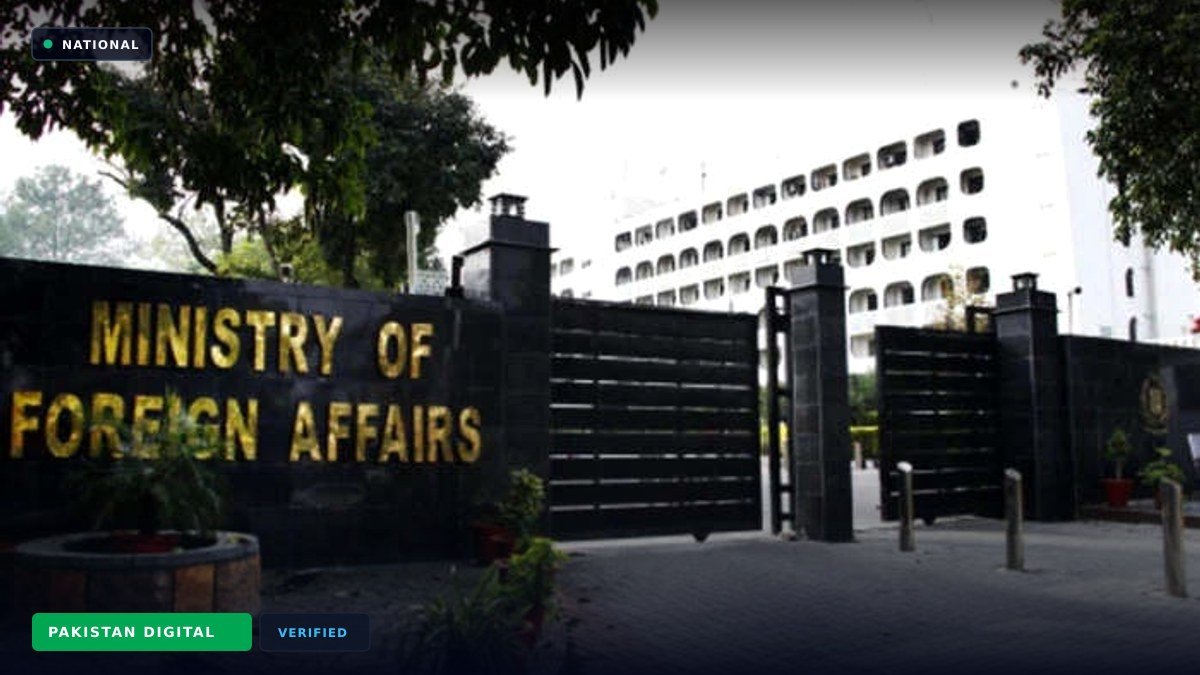
FO urges India not to use int’l forum to spread disinformation. : India should respect Kashmiris’ right to self-determination: FO. : Says India sponsors terrorism to undermine Pakistan's stability.
: Pakistan has strongly rejected remarks made by India at the United Nations, characterising them as "undiplomatic, irresponsible, and baseless," saying New Delhi itself was violating international water treaties and interfering in Pakistan's internal affairs.
In a statement, Foreign Office (FO) Spokesperson Sajjad Haider Khan described India’s comments as an “unacceptable interference in Pakistan's domestic affairs” and contrary to the principles of the UN Charter.
He noted that the Indian allegations were immediately rebutted by Pakistan’s representative during the same UN session.
The spokesperson said that instead of addressing Pakistan's legitimate concerns with respect to India's hydro-terrorism, India has resorted to unsubstantiated insinuations about Pakistan's institutions and its leadership.
The remarks came after an Indian envoy at the UN had accused Pakistan of using the country's natural resources for self-aggrandisement.
The FO said that India's hostility towards Pakistan's development of its mineral resources was equally evident in its persistent efforts to undermine Pakistan's stability.
Islamabad also reiterated longstanding allegations that India sponsors terrorist activities in Balochistan and Khyber Pakhtunkhwa to undermine stability and obstruct the development of local mineral resources.
India was attempting to weaponise shared water resources by unilaterally holding the treaty in "abeyance", said the FO while pointing to a unanimous ruling issued on August 31, 2026, by the Court of Arbitration constituted under the treaty, which affirmed that the agreement remains legally binding and fully in force with no legal basis for unilateral suspension.
India’s refusal to accept the ruling, Pakistan argued, calls into question New Delhi’s commitment to international law and treaty obligations.
The statement further criticised the Indian government’s domestic policies, alleging systematic discrimination against religious and social minorities, including Muslims, Sikhs, Christians, and Dalits.
The FO concluded its response by saying Pakistan urged India to cease using international forums to spread disinformation and instead fulfil its obligations under UN Security Council resolutions concerning Jammu and Kashmir, calling on New Delhi to respect the region's internationally guaranteed right to self-determination.
Public policy specialists and governance analysts view structured administrative initiatives as critical building blocks for institutional efficiency, social equity, and public welfare across Pakistan.
Coordinating policy execution across federal divisions, provincial secretariats, and local directorates ensures that state directives achieve tangible community benefits while maintaining strict operational transparency and budgetary accountability.
Administrative oversight bodies and public monitoring departments are actively deploying digitized service desks and computerized verification systems to streamline public service delivery.
By removing procedural bottlenecks and integrating transparent verification mechanisms, public institutions are working to ensure that civic facilities, developmental benefits, and state safeguards are accessible to all citizens without unnecessary bureaucratic hurdles.
Citizens and civic stakeholders are encouraged to rely on verified government gazettes, certified departmental web portals, and official facilitation counters for authoritative information.
Administrative directorates emphasize that public inquiries, official feedback, and grievance redressals can be registered directly through official departmental helplines and established public service portals.