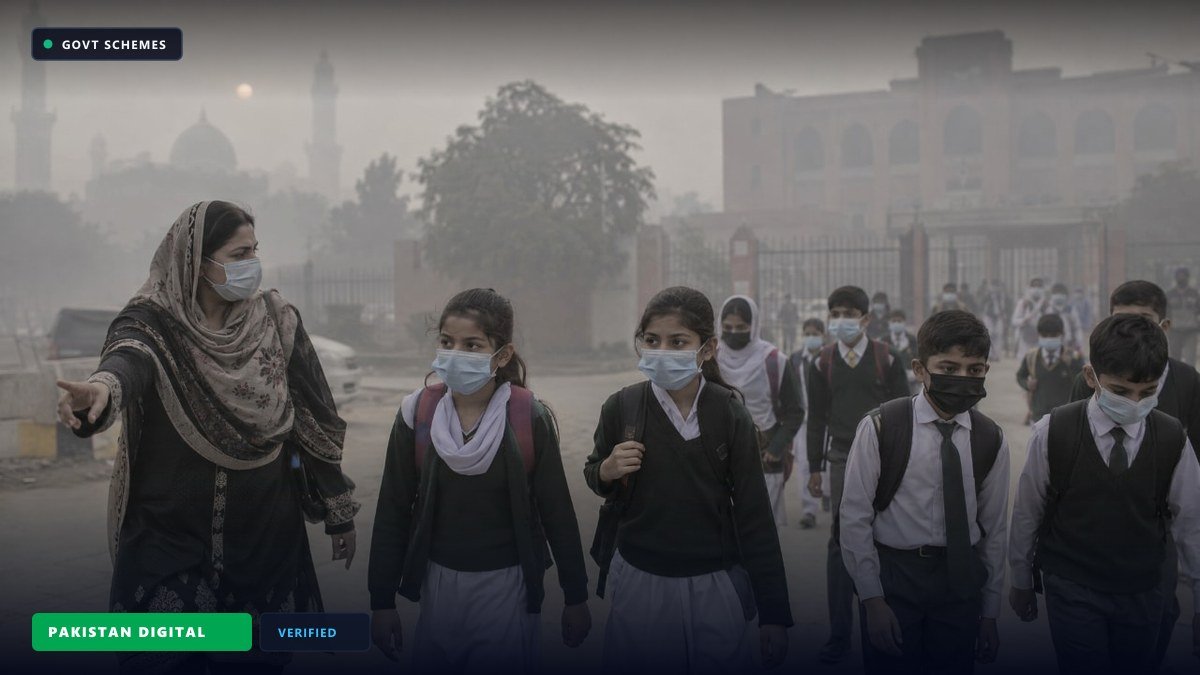
The Lahore District Education Authority (DEA) has made masks mandatory for students in schools as smog persists across the city.
The authority directed government and private school administrations to ensure that students wear masks and enforce the standard operating procedures for smog prevention.
The DEA chief executive officer also told schools to encourage students to drink plenty of water and organise seminars on smog precautions and protection from pollution.
No Smog Holidays Meanwhile, Punjab Education Minister Rana Sikandar Hayat rejected rumours that schools would close because of smog. He stated that smog holidays were not under consideration and no decision had been taken to suspend classes.
Educational activities would continue as usual, he said.
The minister urged parents to keep their children's schooling on track, and advised students to take care of their health, follow government guidance for outdoor activities and wear masks when going outside.
Hazardous Air Quality Levels Air quality readings varied across Lahore monitoring stations on Thursday. The Punjab Environmental Protection Agency dashboard recorded an Air Quality Index of 478 at Multan Road at 5:00 pm, classified as hazardous.
Egerton Road recorded 420 and DHA Phase VI 407, also in the hazardous category. Other readings included 374 at Kahna Nau and 370 at Shahdara, both classified as very unhealthy.
Academic policymakers and educational leaders recognize that continuous curricular modernization and institutional reform are essential to preparing students for the evolving demands of a globalized knowledge economy.
Educational directorates and higher education boards are actively aligning examination methodologies with conceptual learning standards, digital learning management systems, and analytical competencies.
These educational initiatives aim to elevate academic excellence while ensuring equitable learning opportunities for students across all socio-economic backgrounds.
In addition to instructional updates, educational institutions are emphasizing the expansion of research facilities, merit-based scholarship programs, and teacher development seminars.
Close collaboration between academic councils, industry partners, and provincial education ministries ensures that institutional programs equip graduates with practical skills, technological literacy, and ethical leadership capabilities necessary for national development.
Students, parents, and academic administrators are advised to verify all notifications, examination dates, and syllabus guidelines through official board websites and certified academic portals.
Education authorities caution against unofficial digital circulars, urging stakeholders to rely strictly on accredited institutional circulars and authorized institutional helplines.