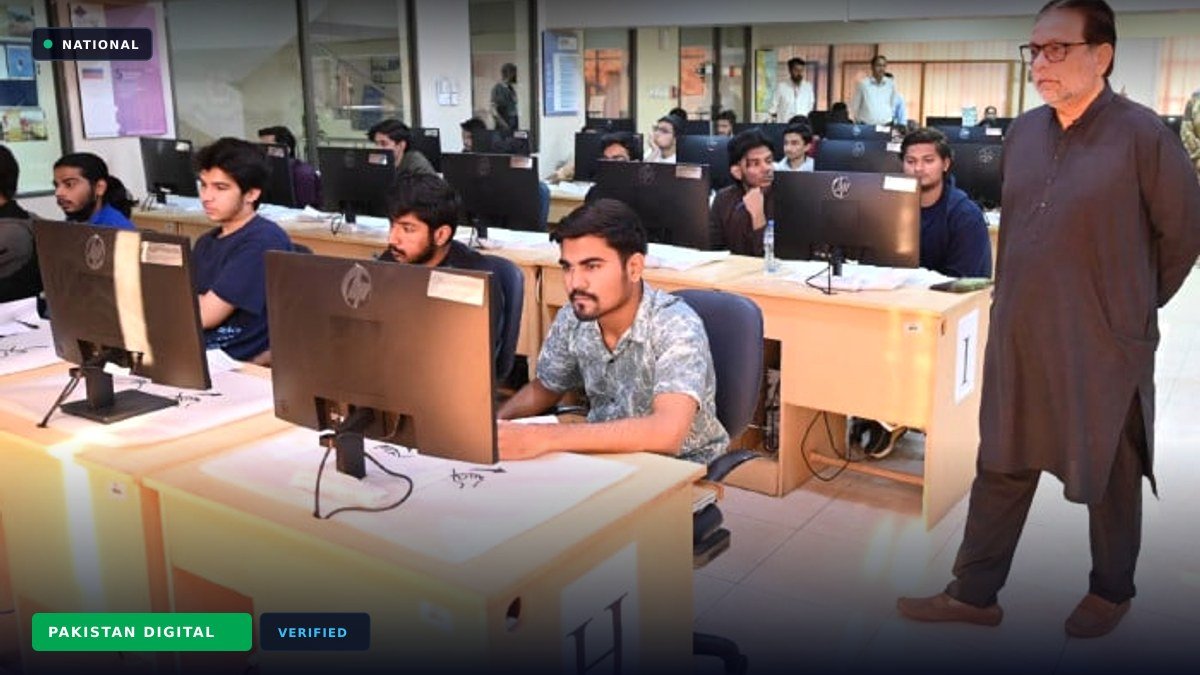
The University of Karachi (KU) on Sunday conducted its first-ever computerised admission test for its BS Computer Science and BS Software Engineering programmes for the 2027 academic year, with thousands of applicants appearing for the examination.
The two-day test is being held in multiple batches across two computerised classrooms. The first batch appeared on Sunday, November 29, while another batch is scheduled to take the test on Monday, November 30.
KU Vice Chancellor Professor Dr Wasim Qazi described the initiative as an important step towards making the university’s admission process more transparent and efficient.
He said merit and transparency must remain the fundamental principles governing admissions at a public-sector university, adding that computerised testing would help strengthen confidence in the fairness and objectivity of the selection process.
“Every student deserves a level playing field,” he said. Dr Qazi said the introduction of technology in admissions was part of a broader effort to modernise the university’s administrative systems, improve efficiency and facilitate students.
During a visit to the examination classrooms, the vice chancellor was briefed on the arrangements for conducting the test in multiple batches to accommodate thousands of applicants.
According to the university, the computerised testing system was developed using Laravel, Livewire, JavaScript and Python, and runs on an Ubuntu server with an Nginx web server. It also uses Redis cache services and queue processing.
The university said the system allows several hundred candidates to access the database simultaneously.
It also features live monitoring of candidates who are appearing, waiting or have completed the test, while results are displayed on-screen when candidates submit their papers.
KU claimed no glitches or errors were reported during the testing phase or on the first day of the examination.
KU Registrar Professor Dr Imran Ahmad Siddiqui, Professor Dr Anila Amber Malik and in-charge of Directorate of Admissions Professor Dr Saima Akhtar Malik and others were present on this occasion.
Public policy specialists and governance analysts view structured administrative initiatives as critical building blocks for institutional efficiency, social equity, and public welfare across Pakistan.
Coordinating policy execution across federal divisions, provincial secretariats, and local directorates ensures that state directives achieve tangible community benefits while maintaining strict operational transparency and budgetary accountability.
Administrative oversight bodies and public monitoring departments are actively deploying digitized service desks and computerized verification systems to streamline public service delivery.
By removing procedural bottlenecks and integrating transparent verification mechanisms, public institutions are working to ensure that civic facilities, developmental benefits, and state safeguards are accessible to all citizens without unnecessary bureaucratic hurdles.
Citizens and civic stakeholders are encouraged to rely on verified government gazettes, certified departmental web portals, and official facilitation counters for authoritative information.
Administrative directorates emphasize that public inquiries, official feedback, and grievance redressals can be registered directly through official departmental helplines and established public service portals.