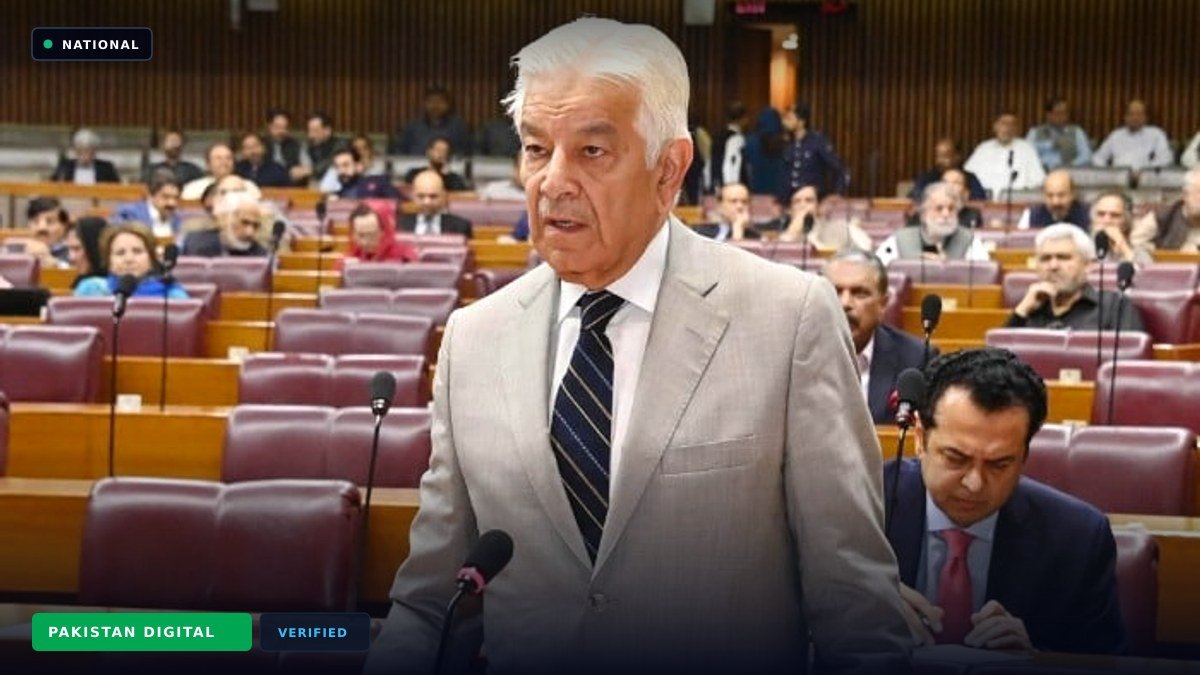
New provinces should not be based on ethnicity. : Asif urges transfer of powers to administrative units. : Says local govts remain dependent on provincial authorities.
: SIALKOT: Defence Minister Khawaja Asif has backed the creation of new provinces in Pakistan, saying even 12 could be considered, provided they are established on administrative rather than ethnic or political grounds.
Speaking exclusively to National News Network in Sialkot on Sunday, the defence minister said the proposal to create new provinces had been under discussion for the past two months, with opinions emerging from across the country.
"If there is a proposal for 12 provinces, then make it 12, but they should not be created on the basis of language, ethnicity or political interests," he said.
Asif advocated the creation of smaller administrative units, arguing that Pakistan's growing population required a more effective system of governance to ensure the provision of public services.
He said power should not remain concentrated in provincial capitals such as Lahore, Karachi, Quetta and Peshawar, calling instead for administrative powers to be transferred to smaller units.
The defence minister also criticised the existing distribution of financial resources, saying funds transferred from the Centre remained at the discretion of provincial governments.
He maintained that these funds were ultimately intended for local government institutions, which themselves remained dependent on provincial authorities. Asif also called on politicians to reconsider their approach towards exercising authority.
"We politicians want to exercise all the power ourselves," he said, adding that political leaders must recognise that power was a trust bestowed upon them by the people.
Referring to Pakistan's administrative history, he recalled that the country's provinces had previously been merged under the One Unit scheme before the decision was reversed.
He also cited Afghanistan as an example of administrative restructuring, saying its provinces had been increased from around eight or 10 to more than 30.
Proposal for 12 provinces His remarks come amid reports that a proposal to reorganise Pakistan into 12 provinces is under consideration, with a nationwide referendum envisaged ahead of a possible 28th Constitutional Amendment.
According to a report published in The News, the proposed arrangement could see Punjab divided into four provinces, Khyber Pakhtunkhwa and Balochistan into three each, and Sindh into two.
Sources familiar with the proposal said the amendment could be considered in the first half of 2027, with preparatory steps potentially beginning in the first quarter.
However, the proposal remains under consideration, and no final decision has been taken regarding provincial boundaries, administrative structures or the constitutional process.
The proposed restructuring is aimed at improving governance, decentralising administrative authority and ensuring a more equitable distribution of development resources across the country.
Public policy specialists and governance analysts view structured administrative initiatives as critical building blocks for institutional efficiency, social equity, and public welfare across Pakistan.
Coordinating policy execution across federal divisions, provincial secretariats, and local directorates ensures that state directives achieve tangible community benefits while maintaining strict operational transparency and budgetary accountability.
Administrative oversight bodies and public monitoring departments are actively deploying digitized service desks and computerized verification systems to streamline public service delivery.
By removing procedural bottlenecks and integrating transparent verification mechanisms, public institutions are working to ensure that civic facilities, developmental benefits, and state safeguards are accessible to all citizens without unnecessary bureaucratic hurdles.
Citizens and civic stakeholders are encouraged to rely on verified government gazettes, certified departmental web portals, and official facilitation counters for authoritative information.
Administrative directorates emphasize that public inquiries, official feedback, and grievance redressals can be registered directly through official departmental helplines and established public service portals.