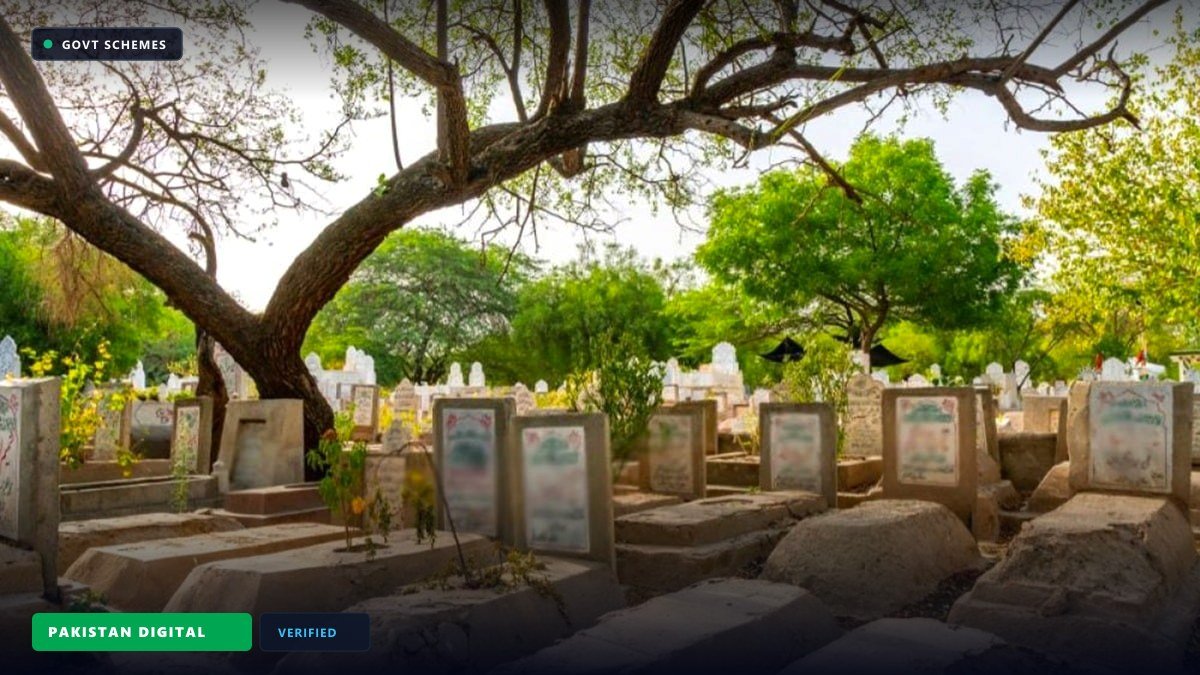
The Capital Development Authority (CDA) has completed 70 percent of construction work on Islamabad’s Pandorian Model Graveyard, with the remaining work expected to finish by the end of the year.
The facility spans 860 kanals and aims to address the capital’s longstanding shortage of burial space. According to the CDA, teams have cleared 95 percent of the government land allocated for the project.
The authority is also taking action against illegal structures and encroachments to remove obstacles and keep construction on schedule. Work on the boundary wall has entered its final stages.
Meanwhile, teams are developing a spacious parking area alongside the graveyard. The administrative block’s grey structure is complete, while roofing and finishing work on the funeral prayer hall, or Janazah Gah, is progressing rapidly.
The CDA said workers have installed light poles across the site and completed half of the utilities-related work. The project also includes environmentally friendly tree planting and permanent, modern lighting arrangements.
CDA Chairman Sohail Ashraf has instructed the relevant teams to meet the completion deadline without compromising construction quality. Teams are working around the clock to accelerate development.
Once operational, the Pandorian Model Graveyard will provide Islamabad residents with an additional burial facility and help reduce pressure on the city’s existing graveyards.
Public policy specialists and governance analysts view structured administrative initiatives as critical building blocks for institutional efficiency, social equity, and public welfare across Pakistan.
Coordinating policy execution across federal divisions, provincial secretariats, and local directorates ensures that state directives achieve tangible community benefits while maintaining strict operational transparency and budgetary accountability.
Administrative oversight bodies and public monitoring departments are actively deploying digitized service desks and computerized verification systems to streamline public service delivery.
By removing procedural bottlenecks and integrating transparent verification mechanisms, public institutions are working to ensure that civic facilities, developmental benefits, and state safeguards are accessible to all citizens without unnecessary bureaucratic hurdles.
Citizens and civic stakeholders are encouraged to rely on verified government gazettes, certified departmental web portals, and official facilitation counters for authoritative information.
Administrative directorates emphasize that public inquiries, official feedback, and grievance redressals can be registered directly through official departmental helplines and established public service portals.