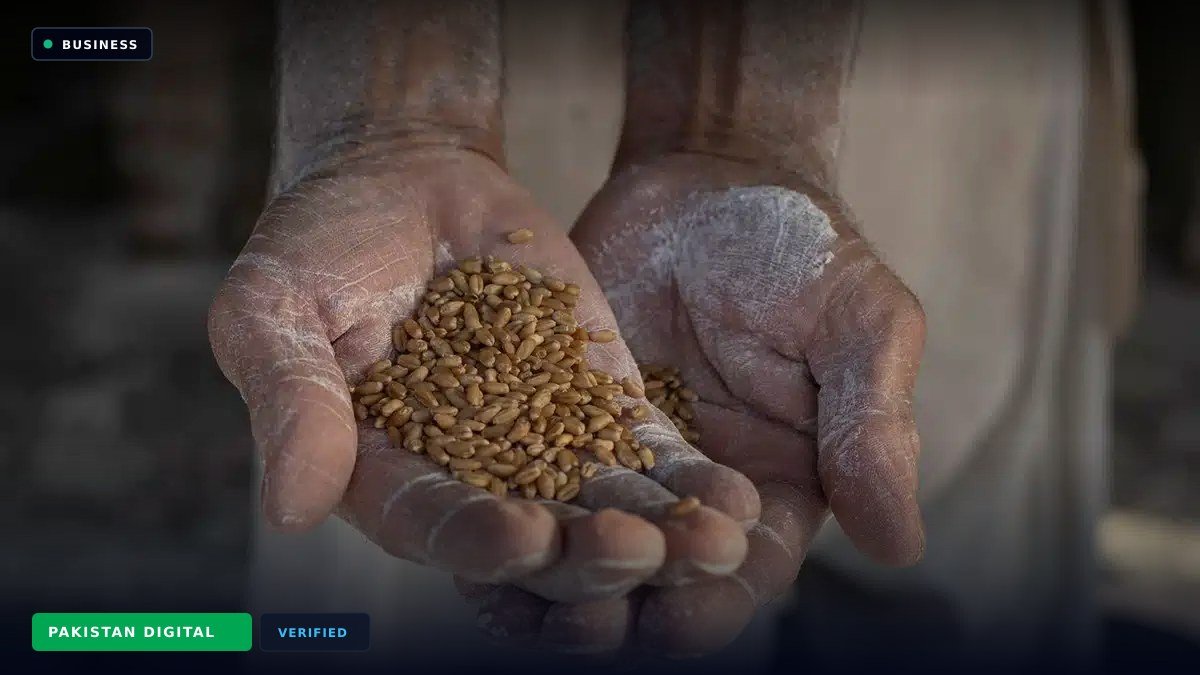
The federal government has increased Pakistan's wheat import ceiling by 150 percent to 2. 5 million tons for 2026-27, turning to foreign supplies as local farmers continue to face difficulties selling their produce at profitable prices.
The Economic Coordination Committee (ECC), chaired by Finance Minister Muhammad Aurangzeb, approved the increase in principle on Friday, raising the previous import ceiling from 1 million tons.
The decision will be sent to the federal cabinet for ratification.
The move comes after provincial governments revised their combined wheat import requirements from an initial 750,000 tons to 550,000 tons before raising them again to approximately 1. 7 million tons amid rising wheat and flour prices.
Punjab has requested 950,000 tons, Sindh 450,000 tons, subject to confirmation, and Khyber Pakhtunkhwa 300,000 tons. Balochistan's requirements will be met through available PASSCO stocks.
The latest decision also comes after Punjab struggled to meet its domestic wheat procurement target under its private-sector procurement model, raising questions about the government's ability to support local farmers and manage domestic supplies.
ECC has allowed imports of up to 2. 5 million tons to provide flexibility in meeting provincial demand and addressing potential shortages. However, the actual quantity imported will depend on confirmed requirements and market conditions.
Provincial governments will bear the entire cost of imported wheat, including procurement, freight, insurance, transportation, port charges, taxes and duties. They will also have to arrange advance payments or appropriate banking facilities.
The committee has approved priority berthing for wheat-carrying vessels to speed up deliveries and minimise additional costs.
The Ministry of National Food Security and Research will handle the program's day-to-day implementation, while a steering committee headed by the Deputy Prime Minister will oversee the overall process.
Finance Minister Muhammad Aurangzeb directed authorities to ensure adequate supplies, manage public stocks and prevent speculation and market manipulation to stabilise wheat and flour prices.
From an economic and commercial perspective, this development reflects dynamic market adjustments and regulatory coordination across Pakistan's financial and trade landscape.
Economic authorities, corporate oversight agencies, and market regulators maintain dedicated monitoring to stabilize commodity metrics, support corporate governance, and sustain investor confidence.
Strategic alignment between public fiscal measures and private sector initiatives remains central to boosting domestic industrial productivity and foreign exchange stability.
Financial analysts and market observers point out that transparent trading practices, formalized accounting frameworks, and reliable supply chains are essential components of long-term economic resilience.
Institutional investors and enterprise leaders are focusing on operational efficiency, digital financial technologies, and export diversification to navigate shifting macroeconomic conditions and global market pressures.
Business enterprises, institutional traders, and general consumers are advised to consult official regulatory notifications, verified market benchmarks, and authorized financial disclosures before finalizing major commercial decisions.
Official gazettes, state regulatory web portals, and certified commodity exchange records provide authentic references for transparent and compliant transactions.