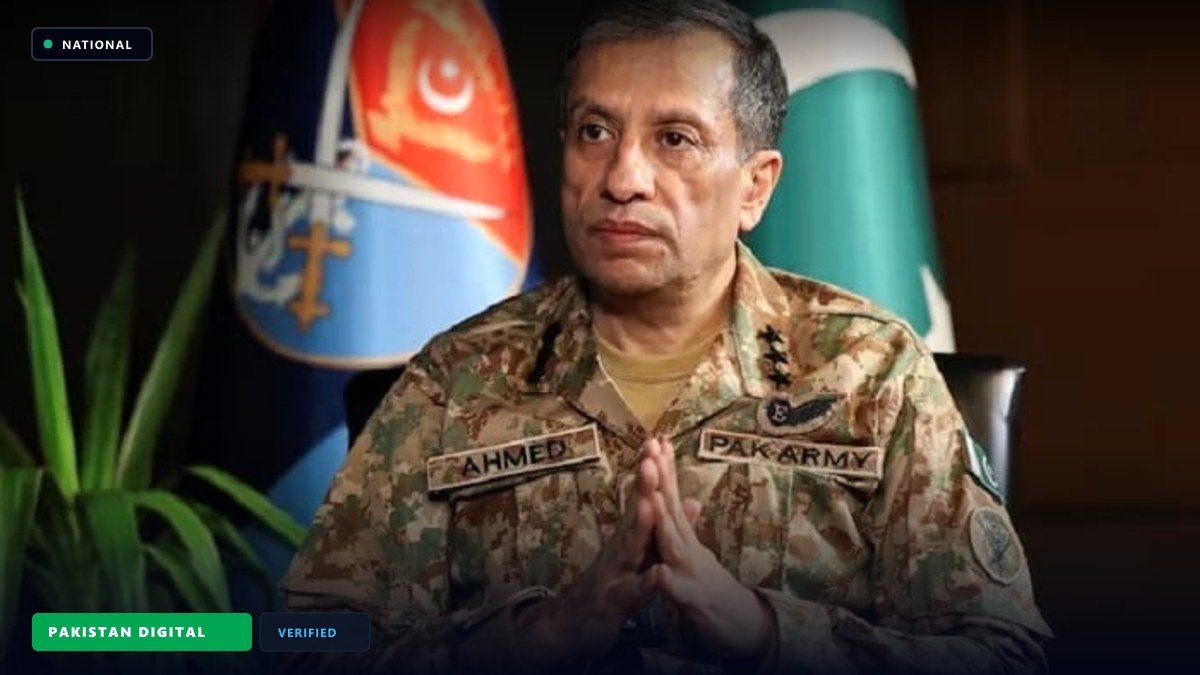
In an unequivocal and stern strategic warning, Director General Inter-Services Public Relations (ISPR) **Lt Gen Ahmed Sharif Chaudhry** has cautioned the Afghan Taliban regime against continuing to facilitate cross-border terrorism, declaring that the interim administration in Kabul lacks the capacity to absorb the severe military punishment Pakistan can deliver.
The remarks, delivered during an extensive interview addressing regional security, border clashes, and emerging asymmetric aerial threats, reflect the military leadership's hardening stance against cross-border aggression.
### The Direct Warning from ISPR DG
Addressing hostile posturing and cross-border drone provocations emanating from Afghan sanctuaries, Lt Gen Ahmed Sharif Chaudhry stated in unambiguous terms:
> *"Whatever they want to send, they can; they may try. We have the capability to take them on. They don't have, I think, the capability to then absorb the punishment that we can put on them."*
### Key Strategic Pillars of Pakistan's Position
The military spokesperson outlined critical security benchmarks governing Pak-Afghan relations:
1. **Harboring of Terrorist Sanctuaries:** Pakistan holds documented, incontrovertible empirical evidence proving that the outlawed **Tehreek-e-Taliban Pakistan (TTP - Fitna Al-Khawarij)** operates sophisticated safe havens, training facilities, and modern weapon armories across Afghan territory under the protective umbrella of the Kabul regime. 2. **Proxies for Regional Adversaries:** The ISPR DG observed that the interim Afghan regime is actively functioning as a convenient proxy for hostile foreign agencies seeking to destabilize Pakistan's western provinces and target infrastructure projects. 3. **Decisive Counter-Terrorism Mandate:** Pakistan's armed forces and security agencies will undertake any kinetic, intelligence-based, or cross-border retaliatory measures deemed necessary to safeguard sovereign borders and protect Pakistani citizens.
The DG ISPR concluded that while Pakistan has historically hosted millions of Afghan refugees and championed regional economic connectivity, national sovereignty and citizen security remain absolute red lines that will be defended at all costs.